This damn book sat on my shelf like an albatross for close to 10 years.
I first tried to read it when I still lived in New York City. I next tried to read it when I still lived in New York City.
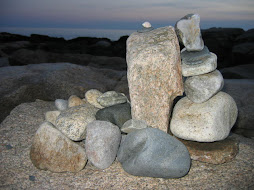
Then I tried to read it on our family vacation to Cape Cod. Then I tried to read it the next summer on our family vacation to Lake Sunapee.
Then I tried to read it in Los Angeles. Then I tried to read it in Los Angeles again. Then I tried again to read it in Los Angeles...again.
Each time I would get to the same point in the book, roughly 15,000 years ago when modern society started to evolve. Perhaps I was not advanced enough to care about my past, perhaps I couldn't relate to the main character (i.e. Earth), perhaps I was too busy using my own blood and fecal matter to paint on the walls of my apartment. Whatever the underlying causes, I was categorically unable to finish this book.
And now a small digression in which I prove that public transportation is good for something other than saving the environment.
Due to financial considerations, Melody and I share a car. There is an easy bus line that takes me to work from where I live. I reluctantly dug up the schedule, charged my iPod and set out to be one of the few who regularly uses THE BUS in Los Angeles.
This is why I was able to finally keep turning the pages of 'Guns, Germs and Steel' until I reached the final one.
One morning I was heading out with my $1.25 in my hand. I'd finished 'The Dark Tower' series for the 4th time and was feeling a bit sheepish about my literary choices. Frankly I wanted to seem smarter to the rest of the idiots on the bus - y'know, the people who yell intimate conversations to their girlfriends, who try to eat soup while standing, who pick their nose right in front of you, who yell at the bus driver for the traffic or because they got on the wrong bus and it isn't stopping where they imagine it should.
There lay 'Guns, Germs and Steel'. The White Elephant in the corner. I grit my teeth. I bared my gums. I picked it up and started again.
For roughly the 37th time.
This time I was determined that it would be different. I reached the onset of modern man within a week and pressed bravely on. I marveled at the travel of seeds from the Fertile Crescent to the Far East! I lorded my intellectual pursuit over my fellow morons on the bus.
And then a funny thing happened.
I got really into it.
And then I had to admit that I was a moron like everyone else. I didn't eat soup on the bus, but I drank coffee and almost spilled it on people. I had conversations on my cell phone that were too loud and too private. I don't think I picked my nose but I wouldn't want to swear on a stack of Bibles to that effect.
But I'd swear on 'Guns, Germs and Steel' which turned out to be one of the best books I almost never read.
Monday, November 23, 2009


Friday, November 20, 2009
Book 34: The Dark Tower by Stephen King
This is for Tim Taylor who will be outraged by the inclusion of anything written by this 'ferocious hack' on a Best Books list.
I can't say that I fully disagree with him either. But that doesn't stop me from loving his books.
'The Dark Tower' is a sprawling 7 book fantasy that straddles two worlds and seems to be cobbled together from memories of black and white westerns and reading 'Lord of the Rings' by flashlight under a blanket.
To give you an idea how much I love this series, I've read it 4 times. All 7 books. Do the math. 7X4=28.
He has better books. 'The Stand' and 'It' come to mind. But this one seems to mean more to him than any other. That intensity comes across and makes it his most personal work even as it is the most fanciful.
There is a kind of apologia inherent in singling King out for praise, as if he weren't worthy, as if the simplicity of his prose and our collective reaction to it were somehow a black mark on modern society. Or so the literati would say. And I count myself among them, cultivating my snobbish categories, looking down my nose at the Grishams, Browns, Binchys and Crichtons of the world.
But I loves me some Stephen King.
Oh he's put out some stinkers. You can almost smell the booze and cocaine while reading 'The Tommyknockers'. 'Pet Sematary' is almost unreadable. Even his best books have a kind of thinness to them. He opens with a few finely wrought sentences but soon he is swamped by the onrush of story and can barely get his pen out of the way fast enough to just let that shit happen.
So. Is Stephen King a great writer? Absolutely not.
Do I love his books? Some, not all.
This one is 7 novels, roughly 5,000 pages. I've read it 4 times. 20,000 pages. Sometimes you can't explain love. You just feel it.
Thursday, November 19, 2009
Book 35: All Over But The Shouting by Jim Walsh
If I were to measure this list solely by sentimental markers this book would be at the top. Number one. Here's why.
This book is an oral history of my favorite band The Replacements. Those who know me know that 'favorite band' is an understatement of colossal proportions. The Replacements are in my DNA.
So the book has that going for it. Jim Walsh, a musician, rock journalist and longtime friend of the band, interviewed anyone and everyone who had been part of the scene The Replacements came out of. Paul Westerberg declined to be interviewed which is only just seeing as his words and voice dominate the discussion as it is. And this band doesn't have 18 gold records and meticulous rock historians cataloging their every move. This book is crucial because all of this happened before it was easy to chronicle every fucking second of every fucking day.
But the real reason that this book means so much to me has nothing to do with The Replacements or music or the book itself.
It has to do with my son Cashel and how much he means to me and who he is. (In a related sidenote, I have only ever asked for one autograph in my life...I had Paul Westerberg autograph Cashel's school photo when I saw him play in Anaheim...he softly said, "He looks like Johnny', his son...a very sweet moment).
The book was published in November of 2007. Cashel was 10. I'd talked about the book, knew it was coming out, couldn't wait to get it. Cashel and Melody conspired to get it for me for Christmas.
Now, Cash was in elementary school at the time and blossoming. He'd finally settled in at Roosevelt Elementary and was shaking off the effects of three big moves (NY to Maine/Maine to TX/TX to CA) in two years. I would walk from my job to his school every day and walk him home. We would have time to kill until his mom came home from work.
Here is where Barnes and Noble comes into the picture. We would mosey over to the 3rd Street Promenade and browse the stacks. Cashel would find the latest book he was interested in, I would do the same and we would sit in our little corner and read. It was here that he convinced me that he could go down to the lower level by himself to get another book. It was here that we talked about how to handle adversity in school, handle his emotions, something I was in the process of doing myself.
One day in November we walked in as usual. Before we went up the escalator to the kid section, I stopped to browse in the Music Section.
Cash saw the book before I did and draped himself in front of it nonchalantly, hiding his Christmas present from me.
Now, I'd known the book was out but I'd deliberately not looked at it because Melody had forbidden me to do so, seeing as it was going to be my Christmas present.
So the history of the band that I'd desperately fallen in love with in high school was now contained in a hardcover book hidden behind my ten year old son Cashel as he tried to convince me to go upstairs.
I've read it three times since then. Cashel is two years older and in middle school. Rumors of a Replacements reunion have been swirling louder than ever. I hope it is delayed until Cash is old enough to go. I'll hide the tickets from him and pretend we are going to some boring dinner party.
I'll never forget him in front of that bookshelf, as if he could possibly conceal what he'd already given me, as if the gift was the book, as if he needed to give me anything at all.
Wednesday, November 18, 2009
Book 36: Wise Blood by Flannery O'Connor
I picture Flannery O'Connor suspended over a wheat field, the night sky screaming away behind her, stars trying to get through the black, get away, be unseen by that all-knowing eye. Her hair is on fire but her thoughts are so cold it can't hurt.
'Wise Blood' doesn't begin, it continues. The sum experience of reading it is akin to waking up inside the dream of a vagrant ecstatic in the midst of a psychotic break.
I once dreamed that I was riding my bicycle along the wharf of Newport, Rhode Island on a gorgeous summer day. I saw bikinis under sarongs, paper cups filled with intoxicant refreshment, glistening tans and gorgeous bodies lounging away under sun that bestowed everything beneath it with a distinct glamour, myself included.
Then I heard a slight buzzing. Without slowing the bike, I turned to place the noise. Perhaps fifty feet behind me flew a white insect, following lazily, outlined against the ancient hull of a tall schooner anchored in the harbor. Some instinct told me I was in danger.
I began to pedal faster hoping to lose the bug. But instead the buzzing grew louder, so loud that I became unnerved and crashed to the cobblestones. The bug landed on my shoulder. It looked like a grasshopper and a cockroach but it was completely white. It sunk a pincer into my neck and instantly I knew I was dead.
I noticed that my knee was bleeding but the paralysis from the bite was so instant that I couldn't feel the cut. I died within seconds.
To those who think that you die if you die in your dreams I share that story. And I say read 'Wise Blood' because it is a dream of death that will not kill you either.
But there is the field. There she hangs, head on fire, stars scrambling to escape, eternity personified.
Friday, October 23, 2009
Book 37: The Great Gatsby by F. Scott Fitzgerald
To measure the greatness of this book, one must resort to a kind of magic, a faux-science akin to phrenology, handwriting analysis or divination. These processes have all been used to catch criminals but that doesn't make them real. Some criminologists claim that DNA is the first ACTUAL criminal science tool.
If literature and American culture followed that same path, the DNA of 'The Great Gatsby' would be splattered all over every little damn crevice of the crime scene that stands for our communal memory. It is in the close to 27 poems I wrote that have a green light blinking off in the distance, it is in the way we respond to Robert Redford as a movie star which is linked by the evidence to Sundance and the independent film movement, it implicates Mia Farrow and by extension Frank Sinatra and Woody Allen, and it is clear as a bell in roughly every other coming of age novel you've ever read. In short, it TOWERS over the collected output of this nation.
I first read 'The Great Gatsby' in high school and it is a testament to my teacher Mr. Crothers that I can honestly say that I knew how vast the reach of those words really was. Mr. Crothers had insisted that we read the Bible before we tackled any modern literature because he claimed (and rightly so, I believe) that it is the source material for much of the finely tuned layers of meaning inherent in any good piece of modern literature. Of course, the same could be said of The Koran or Talmud or any other religious text that infuses modern culture with opportunity for allusion and cross--referencing.
Bottom line? 'The Great Gatsby' terrified me. It reminds me of the first time I heard 'Sgt. Pepper's Lonely Hearts Club Band' and was shocked to realize that I was going to grow up and it was not going to be easy. 'Gatsby' is similar. It starts out like the promise of an immaculate suit and then sends waiter after waiter scurrying by with precarious glasses of red wine poised to stain.
I think of it when I see boats. I think of it when I hear of people in power who have life shattering moments. I think of it when I think of the Rhode Island mansion where they filmed it and where I would later have my Senior Prom. I think of the Bible. And I think of evidence, evidence that cannot be covered up, evidence that will continue to expose the book for what it is...
The apotheosis of American expression, perfectly mirroring the time it was created in and reflecting anew with each passing moment the bitter core of our collective splendid heart.
Wednesday, October 14, 2009
Book 38: Moby Dick by Herman Melville
I took an AP English class senior year. We read "Moby Dick". The real irony is that our teacher was a short drunk Scotsman named Mr. Dick.
I am not lying.
He looked like the Burl Ives snowman from Rudolph The Red Nosed Reindeer after he'd spent a winter drinking hot toddies and eating nothing but beef. His mustache blurted out of his upper lip like Play-Doh through a screen.
He loved "Moby Dick".
He was a bit of a joke to all of us but the amazing thing was that he somehow got the whole class INTO it. He would shriek about it, arms above his head in astonishment, reeking of Scotch, saying things like, "The entire chapter is about the penis! The flaccid penis of the whale!"
He retired not long after I graduated.
I can't really go into the specifics of why I am including it on this list, mostly because I read it over 20 years ago and don't remember much aside from what everyone knows. (White whale, crazy Ahab, Ishmael, etc.)
Any book that is too heavy to be carried in a backpack but still manages to grab the attention of a classroom of horny teenagers must be a classic is all I'm saying.
This story is really about me and my friend Tom DeVincke. And my other friend Justin Brady.
By the time senior year rolled around, Tom, Justin Brady and I were a drummerless punk powerhouse called Fecund Youth. We spent most of our time playing basketball and cutting each other down. I don't talk to Tom as much as I talk to Justin but I still consider him to be a best friend.
There are two parts to the story...
Part 1
Mr. Dick doesn't seem to care that I pull my desk up to the front of my row to sit with Tom. No one else seems to be allowed to switch seats or move but somehow we've escaped scrutiny. We must be exceptionally well-behaved, you surmise. Uh, no. We talk openly about Minor Threat, The Replacements, 7 Seconds, Dead Kennedys, and our own future as leaders in the punk movement. We snap rubber bands at testicles. We draw X-rated cartoons on textbooks. We are incorrigible.
Mr. Dick says nothing. For months and months. Both of us are A students but we are most likely ruining the class for everyone else. As well as posing a fire hazard should anyone have to get out the top of the row of desks.
Somehow we exhaust the patience of our saintly inebriated English teacher.
He looks over at us (Tom and Brendan). We are talking away. He snaps...
"Tim and Brian! Shut up!"
Part 2
I am moving out of the condo in Brooklyn that I'd shortly shared with my wife. We are going to be divorced. I need help moving. I haven't seen Tom in a couple of years.
But he made the trek to Brooklyn from Rhode Island to help me haul my things out, to help me get my life back on track. And Justin lent me the money to get the apartment.
So the next time you see a couple of teenagers being rude and disrespectful to everything and everyone around them, the next time you judge three young hoodlums loitering outside of your local supermarket drinking grape soda and popping zits...
Just know they may need each other down the line.
Monday, July 27, 2009
That'll Learn Ya Redux
Back on January 24, 2008, a full 20 months ago, I wrote a post about a song I hadn't heard in over 20 years.
This weekend I heard the song.
To recap...
That'll Learn Ya was a Rhode Island band in the early/mid 1980's. They gained a big local following. I bought a cassette that they released. On it was the song 'Robert DeNiro Movies'. I loved the song. But lost the cassette.
Every time I've been home to my parents house in Rhode Island I've dug through boxes of old tapes, looking for that missing gem. Never found it.
But through the wonder of Facebook, I recognized the name of one of the guitar players, Al Valatka. Within 20 minutes of this I was listening to a copy of 'Robert DeNiro Movies'.
Even crazier? A mere 10 days earlier ANOTHER old fan of That'll Learn Ya (a guy I went to high school with) had convinced That'll Learn Ya to reunite. The day the songs were uploaded to the internet for the first time? My birthday.
What a grand old world. So I'm planning on attending a Thanksgiving reunion show of That'll Learn Ya.
Next time anyone rails about how the Internet has dehumanized us all and left us disconnected and disaffected, just remind them to come to Rhode Island in November to see a concert and listen to some songs that would have been lost forever to me if not for Facebook.
By the way, the song was as good as I remembered it and I had the melody perfectly.
Friday, July 24, 2009
Book 39: The Left Hand Of Darkness by Ursula K. LeGuin
In my junior year of college, I got a great job. The theater department had gotten a grant to create an acting troupe. Work study. Other departments could then bring us in to perform in classrooms as a teaching tool. We were to be called 'ETC', the Educational Theater Company' and 6 of us made the squad.
I think I made $1,000. I only remember one scene.
A science fiction class was reading 'The Left Hand Of Darkness' and wanted to have some of the information presented as a debate. Three of us had to quickly read the book and dissect the chapter in question into a 'scene'...needless to say, we had a blast.
What started as a job quickly became an obsession for all of us. The book tells the story of Genly Ai, a representative of the Ekumen, a new ruling group which is based in equality and social order. There are planets that had once been part of the empire that have fallen out of contact with the rest of interplanetary society so envoys are sent to observe in secret before trying to reintroduce these runaways back into intergalactic community.
Long story short. Genly Ai goes to observe a planet where the inhabitants have a very unique sexuality. They go into a kind of 'heat' 2 days out of every 26. For most of the time they are androgynous and asexual. But on those 2 days they morph into either male or female form. One month they might be male, the next female. The father of one child could be the mother of many more.
This book has continued to resonate in my heart almost 20 years later even though I remember NO details of the plot other than that one.
LeGuin, in inventing this different mode of sexual living, points out just how fixed and trapped we can be in our own version. This isn't judged, merely presented. The complications that arise in this book are COMPLETELY impossible here. Imagine. You meet someone. You like them. For almost a month you get to know them. The moment of transformation occurs and you may be the male, you may be the female. But your knowledge of that person HAS no sex attached to it, the sex is completely OTHER. Which, when you think about it, is not all that foreign at all.
We met in dingy college rehearsal rooms and hashed out three different characters who were debating the information brought back by Genly the observer. One of us was a functionary, determined to keep his conservative view of sex and sensuality. One of us was a purely scientific mind who merely wanted to investigate the information as dispassionately as possible. And the third, I think, was a more artistic soul who was interested in the emotional aspect of this anomaly above all.
We were also in the middle of rehearsing 'The Mystery of Edwin Drood' (see 'As Datchery I Did My Bit' elsewhere on the blog for an amusing anecdote on that subject) so my friend David and I had big mutton chops and long unkempt hair that could be slicked back to approximate Dickensian style. This added to our alien appearance since this was before grunge swept the nation and shagginess became chic again.
Imagine if you will a classroom of sci-fi literature nerds seeing us sweep in wearing robes and hotly debating 'kemmer', the 'Ekumen', 'mindspeak', and Genly Ai's relationship with Estraven, especially what happened out on the ice when Estraven 'transformed' during his 'heat' period and Genly Ai was the only other being around...
And the State paid for it! I love America.
Thursday, July 23, 2009
Book 40: The Shipping News by E. Annie Proulx
Somehow this book took me by surprise in spite of the fact that everyone I knew was reading it, everyone who had read it insisted I read it, and everywhere I looked a review raved.
I resisted this tidal wave of praise out of an innate sense of contrariness, a go-against-the-grain-and-don't-believe-the-hype sensibility that was most likely honed while I was a teenager listening to music that was born of total outsider status and despising the flavor of the month. This kneejerk eclecticism kept me from appreciating some very worthwhile music, books, movies, etc., but it is a stance I still prefer to its inverse, which seems slavish and Pavlovian to me.
Needless to say, the second the character of Quoyle appeared I realized that popularity in this case was merited. Like 'The Scarlet Letter' or 'Ethan Frome', this book lives in a spare, sparse, isolated environment which is made all the more stark by the love affair that populates it. This elevates the subject matter to something universal and not soap opera-ish. Which is also why the movie seems an abomination to me. Never having seen it I'll never know for sure.
I do know that the book affected me in an emotional way in which few books have. I love books in different ways. 'Crime and Punishment' I love in the way a citizen loves the country of their birth. 'Moby Dick' I love the way a young boy loves the worlds he imagines for himself to play in. 'The Great Gatsby' I love the way you love a masterpiece painting hanging in a museum of a beautiful woman, the pose capturing a moment in a life you'll never quite grasp.
'The Shipping News' feels like an actual love affair, one that had to end, one that was destined to end, one that, looking back on, you can't quite believe that you started because the end was already so obvious.
This is due partly to my reluctance in picking the book up in the first place.
I dated a girl in college. Dated is a strong word. We flirted for a short time and then she came to a party at my house. She slept with someone else at that party and I fooled around with someone else but we were at the party together. There was a desperation to our coupling when it finally occurred, already laced with guilt because we'd betrayed each other from the first.
This pattern continued over the next year and a half, only ending when the Atlantic ocean intervened and I went to France. Once in France it was as if I was exorcising devils daily. I sank deep into a blackly nihilistic view of humanity which haunted me until about last week.
'The Shipping News' is like that for me. This is heightened by my relationship with the rest of E. Annie Proulx's work. I remember breathlessly awaiting 'Accordion Crimes'. I read the short story volume 'Close Range' which contains 'Brokeback Mountain'. I can't really overstate how much I disliked these books, 'Accordion Crimes' especially. Ooh, I hated and still hate those books.
This adds yet another layer of the bitter remembrance factor to my view of 'The Shipping News'. Why would she move away from that style? Why wouldn't that be the catalyst for deeper, plainer, stronger work?
And like the scars from that collegiate love affair which was over before it ever began, what might have been is stamped onto what is, until you decide to scrape it off and let it heal. So, E. Annie Proulx, I let you go. Thanks for the one book I loved but no longer need.
Wednesday, July 22, 2009
Book 41: The Fermata by Nicholson Baker
When I was in 8th grade, I used to fantasize that I could stop time. While everyone around me sat frozen, I dreamed of being able to go right up to C. and get as close to her as I wanted. I didn't actually kiss a girl until I was a junior in high school so my fantasy was G rated. I don't think I would have even kissed C. during the time stoppage. I only wanted to get close enough to look at her without her knowing I was doing it. To see her for a moment without having to worry about being caught looking, to see her free of her own knowledge of being watched, to see her in her purest essence.
Nicholson Baker was not in 8th grade when he wrote 'The Fermata'.
His narrator has discovered that he can ACTUALLY do what I dreamed of. And somehow, in spite of the X-rated and surely criminal actions he undertakes, the novel maintains a tone of innocence and exuberance.
I have only read Baker's sex books, this and 'Vox' which is one long phone sex transcription. Perhaps someday I'll read his other stuff, but for me, his treatment of sex as a viable literary device is refreshing to the point of revolution. Usually sex in books comes as a moment of other, as a deviation from the story, as a catalyst for tragedy or euphoria, in other words as something that either precedes or follows the REAL event.
In 'The Fermata', sex is the event.
There is something refreshing about this, as if a dinner party has finally loosened up because some difficult subject were accidentally broached. Once the elephant in the corner of the room is acknowledged, things get really interesting.
I read this book at a time when I really needed a frank, unapologetic look at the male sex drive. How that drive can distort us if it is not directed in a positive manner, how much time can be wasted in a fantasy land of your own making, how lost we can become if we remain alone inside of our desires. The main character in 'The Fermata' is struggling with these questions and ultimately realizing that even the presence of real magic cannot replace the wonder of actual human interaction.
Baker somehow treats this X-rated journey not like a pornographic romp but as a crisis of the soul. This juxtaposition has the odd effect of heightening the titillation factor because Baker isn't apologizing for the content, merely positioning it as a fulcrum. The narrator must let go of this wondrous anomaly if he wants to reap the benefits of an actual relationship.
Ultimately it is a book about growing up, about discarding juvenile fantasy in favor of actual experience.
But, boy did I want to stop time and run my fingers through C.'s hair.
Subscribe to:
Posts (Atom)